How to Build Your Own Workout Routine: Plans, Schedules and Exercises
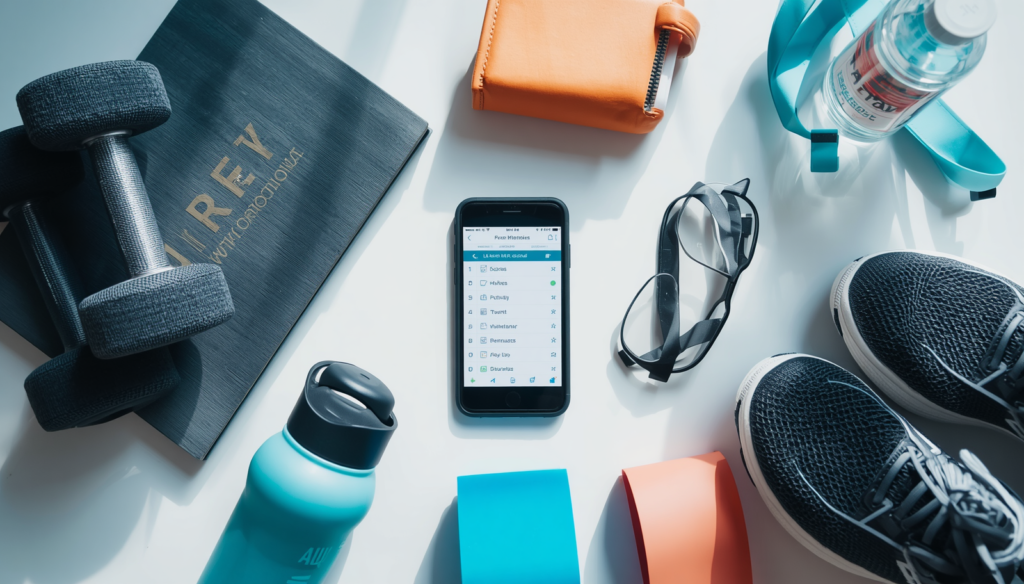
Building your own workout routine can feel confusing at first. There are thousands of exercises, endless training plans, and a lot of advice that sounds more complicated than it needs to be.
The good news is this: a good workout routine does not have to be fancy. It needs to match your goal, fit your schedule, train your whole body, and progress over time.
Whether you want to build muscle, get stronger, lose fat, improve fitness, or simply feel better, the same basic principles apply. Once you understand those principles, you can create a routine that works for you instead of copying a random plan and hoping for the best.
This guide will walk you through how to build your own workout routine, including how to choose exercises, set a schedule, structure your training week, and adjust your plan as you improve.
Start With Your Main Goal
Before choosing exercises or planning gym days, decide what you want your routine to achieve.
Your goal affects how often you train, what exercises you choose, how many sets and reps you do, and how hard each session should feel.
Common goals include:
Building muscle: Focus on resistance training, enough weekly volume, progressive overload, and recovery.
Getting stronger: Prioritize compound lifts, lower rep ranges, longer rest periods, and consistent practice.
Losing fat: Combine strength training with cardio, daily movement, and nutrition habits that support a calorie deficit.
Improving general fitness: Use a mix of strength training, cardio, mobility, and manageable weekly consistency.
Improving athletic performance: Train strength, power, conditioning, mobility, and sport-specific movement patterns.
You can have more than one goal, but one should be the priority. For example, you might want to build muscle and lose fat. That is possible, especially for beginners, but your routine should still have a clear focus.
A simple way to choose is to ask: “What would make me feel like this plan worked after 12 weeks?”
If the answer is “I can lift heavier weights,” focus on strength. If it is “my clothes fit better,” fat loss may be the priority. If it is “I feel healthier and more energetic,” general fitness is a great target.
Know Your Starting Point
A workout routine should challenge you, but it should not crush you.
Think honestly about your current fitness level. A beginner who has not trained in years does not need six hard gym sessions per week. In fact, that is often the fastest path to soreness, frustration, and quitting.
Consider:
How many days per week can you realistically train?
How much time do you have per session?
Do you have access to a gym, or are you training at home?
Do you have injuries, pain, or movement limitations?
Do you prefer weights, machines, bodyweight exercises, classes, running, cycling, or a mix?
What have you tried before, and what did you enjoy?
The best workout routine is not the most intense one. It is the one you can repeat long enough to see results.
If you are completely new, start with two or three days per week. If you already train regularly, three to five days may work well. Advanced lifters or athletes may train more often, but they also need more careful recovery planning.
Understand the Main Parts of a Balanced Routine
A complete fitness routine usually includes four main elements:
Strength training: Builds muscle, supports joints, improves metabolism, and helps with long-term health.
Cardio: Improves heart and lung fitness, supports fat loss, and increases work capacity.
Mobility and flexibility: Helps you move better, reduce stiffness, and prepare your body for training.
Recovery: Allows your muscles, joints, and nervous system to adapt.
You do not need equal amounts of each. A muscle-building plan will focus more on lifting. A running plan will focus more on cardio. But most people benefit from having all four in some form.
For example, a balanced week might include three strength sessions, two short cardio sessions, and five minutes of mobility before workouts.
Choose Your Training Split
A training split is how you divide your workouts across the week.
There is no perfect split for everyone. The best one depends on your schedule, goal, and experience level.
Here are the most common options.
Full-Body Routine
A full-body routine trains your major muscle groups in each session.
This is one of the best choices for beginners, busy people, and anyone training two or three days per week.
A simple full-body workout might include:
Squat or leg press
Deadlift variation or hip thrust
Push-up or bench press
Row or pulldown
Shoulder press
Core exercise
With full-body training, you get frequent practice and enough recovery between sessions. It is also flexible. If you miss one workout, your whole week does not fall apart.
Best for: Beginners, general fitness, fat loss, busy schedules
Frequency: Two to four days per week
Upper/Lower Split
An upper/lower split separates upper-body and lower-body workouts.
For example:
Monday: Upper body
Tuesday: Lower body
Thursday: Upper body
Friday: Lower body
This works well for people who want to train four days per week. It allows more volume per muscle group than a basic full-body routine while still giving enough recovery.
Upper-body days usually include presses, rows, pulldowns, shoulder work, and arm exercises. Lower-body days include squats, deadlifts, lunges, hip thrusts, hamstring curls, calf raises, and core work.
Best for: Muscle building, strength, intermediate lifters
Frequency: Four days per week
Push/Pull/Legs Split
A push/pull/legs split divides workouts by movement type.
Push: Chest, shoulders, triceps
Pull: Back, biceps
Legs: Quads, hamstrings, glutes, calves
This can be done three days per week or repeated over six days.
A three-day version is manageable for many people. A six-day version is better suited to experienced lifters who recover well and enjoy frequent training.
Best for: Muscle building, gym-based training
Frequency: Three to six days per week
Body-Part Split
A body-part split gives each muscle group its own day or focus.
For example:
Monday: Chest
Tuesday: Back
Wednesday: Legs
Thursday: Shoulders
Friday: Arms
This is common in bodybuilding, but it is usually not the best option for beginners. Training each muscle only once per week can work, but many people make faster progress training muscles two or more times weekly.
Best for: Advanced muscle-building routines
Frequency: Four to six days per week
Pick the Right Exercises
Once you choose your split, you need to fill it with exercises.
A strong routine should include movement patterns, not just random muscles. This helps you build balanced strength and avoid neglecting important areas.
The main movement patterns are:
Squat pattern: Squats, goblet squats, leg press, split squats
Hip hinge: Deadlifts, Romanian deadlifts, hip thrusts, kettlebell swings
Horizontal push: Push-ups, bench press, dumbbell press, machine chest press
Horizontal pull: Barbell rows, dumbbell rows, seated cable rows
Vertical push: Overhead press, dumbbell shoulder press, machine shoulder press
Vertical pull: Pull-ups, chin-ups, lat pulldowns
Single-leg work: Lunges, step-ups, Bulgarian split squats
Core training: Planks, dead bugs, hanging knee raises, Pallof presses
You do not need every pattern in every workout, but your weekly plan should cover most of them.
A good rule is to start with compound exercises, then add isolation exercises.
Compound exercises use multiple joints and muscle groups. Examples include squats, deadlifts, bench presses, rows, and pull-ups. They should usually come early in your workout when you have the most energy.
Isolation exercises target one main muscle group. Examples include biceps curls, triceps pushdowns, leg extensions, lateral raises, and hamstring curls. These are useful, but they should support the main work, not replace it.
Sets, Reps, and Rest Periods
Sets and reps depend on your goal.
A “rep” is one repetition of an exercise. A “set” is a group of reps.
For general fitness and muscle building, a useful starting point is:
2 to 4 sets per exercise
6 to 12 reps for most strength exercises
10 to 20 reps for smaller isolation exercises
60 to 120 seconds of rest between sets
For strength, you may use heavier weights and lower reps:
3 to 5 sets
3 to 6 reps
2 to 4 minutes of rest
For endurance or conditioning, you may use lighter weights, higher reps, circuits, or shorter rests.
Beginners should avoid training to failure on every set. “Failure” means you cannot complete another rep with good form. It can be useful sometimes, but doing it constantly increases fatigue and can make recovery harder.
Instead, finish most sets with one to three good reps left in the tank. The last few reps should feel challenging, but your technique should still be controlled.
How to Progress Over Time
Your body adapts to what you repeatedly ask it to do. That means your workout routine needs progression.
The most common method is progressive overload. This means gradually increasing the challenge over time.
You can progress by:
Adding weight
Doing more reps
Doing more sets
Improving form
Increasing range of motion
Reducing rest periods
Slowing down the movement
Adding a harder variation
You do not need to increase everything at once.
For example, say you are doing dumbbell bench presses for 3 sets of 8 reps with 20 kg dumbbells. Your goal might be to reach 3 sets of 12 reps. Once you can do that with good form, increase the weight and return to 8 reps.
This is called double progression, and it is simple and effective.
Example:
Week 1: 20 kg for 3 sets of 8
Week 2: 20 kg for 3 sets of 9
Week 3: 20 kg for 3 sets of 10
Week 4: 20 kg for 3 sets of 11
Week 5: 20 kg for 3 sets of 12
Week 6: 22.5 kg for 3 sets of 8
Progress does not have to happen every workout. Some weeks will feel better than others. The goal is improvement over months, not perfection every session.
Sample Workout Plans
Here are a few simple plans you can use or adapt.
Beginner Full-Body Plan: 3 Days Per Week
Train on non-consecutive days, such as Monday, Wednesday, and Friday.
Workout A
Goblet squat: 3 sets of 8 to 12
Push-up or chest press: 3 sets of 8 to 12
Seated row: 3 sets of 8 to 12
Romanian deadlift: 3 sets of 8 to 10
Plank: 3 sets of 20 to 45 seconds
Workout B
Leg press: 3 sets of 10 to 12
Lat pulldown: 3 sets of 8 to 12
Dumbbell shoulder press: 3 sets of 8 to 12
Hip thrust: 3 sets of 10 to 12
Dead bug: 3 sets of 8 to 12 per side
Alternate the workouts each session.
Week 1: A, B, A
Week 2: B, A, B
This plan is simple, balanced, and easy to progress.
Four-Day Upper/Lower Plan
This is a good option if you want to build muscle and strength.
Monday: Upper Body
Bench press or dumbbell press: 3 sets of 6 to 10
One-arm dumbbell row: 3 sets of 8 to 12
Overhead press: 3 sets of 6 to 10
Lat pulldown: 3 sets of 8 to 12
Lateral raise: 2 sets of 12 to 20
Triceps pushdown: 2 sets of 10 to 15
Biceps curl: 2 sets of 10 to 15
Tuesday: Lower Body
Squat or leg press: 3 sets of 6 to 10
Romanian deadlift: 3 sets of 8 to 10
Walking lunge: 2 sets of 10 per leg
Hamstring curl: 2 sets of 10 to 15
Calf raise: 3 sets of 10 to 20
Plank: 3 sets of 30 to 60 seconds
Thursday: Upper Body
Incline dumbbell press: 3 sets of 8 to 12
Seated cable row: 3 sets of 8 to 12
Pull-up or assisted pull-up: 3 sets of 6 to 10
Machine shoulder press: 2 sets of 8 to 12
Face pull: 2 sets of 12 to 20
Hammer curl: 2 sets of 10 to 15
Overhead triceps extension: 2 sets of 10 to 15
Friday: Lower Body
Deadlift or trap-bar deadlift: 3 sets of 3 to 6
Front squat or goblet squat: 3 sets of 8 to 10
Bulgarian split squat: 2 sets of 8 to 10 per leg
Leg extension: 2 sets of 10 to 15
Calf raise: 3 sets of 10 to 20
Pallof press: 3 sets of 10 to 12 per side
This plan gives each major muscle group enough weekly attention without making any single session too long.
Three-Day Push/Pull/Legs Plan
This works well for people who prefer focused workouts.
Monday: Push
Bench press: 3 sets of 6 to 10
Dumbbell shoulder press: 3 sets of 8 to 12
Incline dumbbell press: 2 sets of 8 to 12
Lateral raise: 3 sets of 12 to 20
Triceps pushdown: 3 sets of 10 to 15
Wednesday: Pull
Lat pulldown or pull-up: 3 sets of 8 to 12
Barbell or dumbbell row: 3 sets of 8 to 12
Seated cable row: 2 sets of 10 to 12
Face pull: 2 sets of 12 to 20
Biceps curl: 3 sets of 10 to 15
Friday: Legs
Squat or leg press: 3 sets of 6 to 10
Romanian deadlift: 3 sets of 8 to 10
Walking lunge: 2 sets of 10 per leg
Hamstring curl: 2 sets of 10 to 15
Calf raise: 3 sets of 10 to 20
Hanging knee raise or plank: 3 sets
This is a clear, easy-to-follow structure. If you want to train more often later, you can add another cycle across the week, but only if recovery is good.
Add Cardio Without Hurting Recovery
Cardio is useful even if your main goal is building muscle. It supports heart health, improves stamina, helps with fat loss, and can make lifting sessions feel easier.
The mistake many people make is adding too much too soon.
Start with two or three cardio sessions per week. These can be short.
Examples:
20 to 30 minutes of brisk walking
15 to 25 minutes of cycling
10 to 20 minutes of intervals
30 minutes on an incline treadmill
Swimming, rowing, hiking, or sport
For general fitness, steady moderate cardio works well. You should be breathing harder than usual but still able to speak in short sentences.
For conditioning, you can add intervals. For example:
30 seconds hard, 90 seconds easy, repeated 6 to 10 times
Do hard intervals sparingly, especially if you are also lifting heavy. They are effective but tiring.
If your main goal is strength or muscle gain, place intense cardio after lifting or on separate days. Light cardio, like walking, can usually be done anytime.
Warm Up Properly
A good warm-up prepares your body for training. It should not exhaust you.
A simple warm-up can take 5 to 10 minutes:
Start with light movement, such as walking, cycling, or rowing.
Then do dynamic mobility drills for the areas you will train.
Finally, perform lighter warm-up sets of your first main exercise.
For example, before squats:
5 minutes of cycling
Bodyweight squats
Hip openers
Empty bar squats
A few gradually heavier sets before your working weight
Static stretching before lifting is not always necessary. Save longer stretching for after workouts or separate mobility sessions if it helps you feel better.
Plan Recovery Days
Recovery is where progress happens. Training creates the stimulus. Rest allows your body to adapt.
A good routine includes rest days, lighter days, and enough sleep.
Signs you may need more recovery include:
Performance dropping for several workouts in a row
Constant soreness
Poor sleep
Irritability
Joint aches
Loss of motivation
Feeling unusually tired before workouts
One missed workout is not a disaster. But constantly pushing through fatigue can slow your progress.
Most people do well with at least one or two rest days per week. A rest day does not mean you have to sit still. Walking, stretching, easy cycling, or light mobility work can help you recover.
Track Your Workouts
Tracking makes progress easier.
Write down:
Exercises
Sets and reps
Weight used
Rest periods, if helpful
How hard the workout felt
Any pain or form notes
You can use a notebook, spreadsheet, or fitness app.
Without tracking, it is easy to repeat the same workout for months and wonder why nothing changes. With tracking, you can see when to add weight, when to repeat a session, and when to back off.
Do not overcomplicate it. A simple note like “Leg press: 3×10 at 100 kg, felt strong” is enough.
Adjust Your Routine When Needed
Your first routine will not be perfect. That is normal.
Give a plan at least four to six weeks before judging it, unless it causes pain or clearly does not fit your life.
Then ask:
Am I getting stronger or doing more reps?
Do I feel better, worse, or the same?
Can I recover between workouts?
Are my workouts too long?
Do I enjoy the plan enough to keep doing it?
Is any muscle group being neglected?
If progress is good, keep going. You do not need to change exercises constantly. In fact, changing too often can make it harder to improve.
If progress stalls, make small changes first. Add a set, reduce volume, swap an exercise, improve sleep, or adjust your nutrition.
Common Mistakes to Avoid
One common mistake is doing too much too soon. Motivation is high at the beginning, but your joints, muscles, and schedule need time to adapt.
Another mistake is copying advanced routines. A professional athlete or bodybuilder may train six days a week because their lifestyle supports it. That does not mean it is the right plan for you.
Poor exercise selection is also common. A routine made only of curls, crunches, and treadmill work will miss major movement patterns. A balanced plan trains legs, back, chest, shoulders, core, and hips.
Many people also ignore progression. They do the same weights, sets, and reps every week. Maintenance is fine if that is your goal, but improvement requires a gradual increase in challenge.
Finally, do not judge your routine after one bad workout. Energy, sleep, stress, and nutrition all affect performance. Look at trends over time.
Build a Routine You Can Actually Follow
The best workout routine is not the one that looks most impressive on paper. It is the one you can do consistently.
A realistic plan beats an extreme plan every time.
If you have three days per week, build a strong three-day plan. If you only have 30 minutes, choose fewer exercises and focus on the most important ones. If you hate running, choose another form of cardio. If you train at home, use bodyweight exercises, bands, dumbbells, or whatever equipment you have.
Your routine should support your life, not take it over.
Final Thoughts
Building your own workout routine starts with a clear goal, a realistic schedule, and a balanced selection of exercises. You do not need a complicated plan to make progress. You need consistency, effort, recovery, and a way to gradually increase the challenge.
Start simple. Choose a split that fits your week. Train the major movement patterns. Track your workouts. Add cardio and mobility in a way that supports your goal. Then adjust based on how your body responds.
A good routine is not built once and followed forever. It evolves with you.
The most important step is to begin with a plan you can repeat. Once you do that, progress becomes much easier to measure, manage, and maintain.